

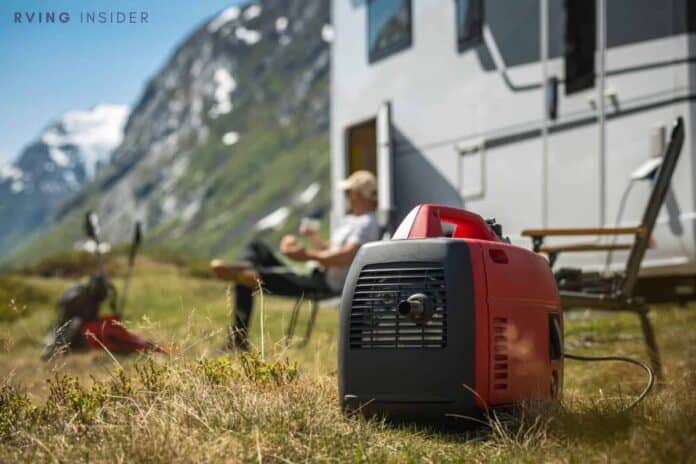
Looking for the best quiet generator for camping trips? We’ve been doing my research to find the most peaceful power solution so you can enjoy nature’s sounds and have a good sleep at night.
We are avid campers. So we know how important it is to have just the right amount of juice for lighting, devices, and more, without all the disruptive decibels. We will share our insights on 5 of the quietest RV generators that won’t disturb your relaxation in the outdoors.
Contents
- What is the Quietest Generator Type for RV Camping?
- 5 Best Quiet RV Generators For Camping
- Best Overall: Honda EU2200iTAN Super Quiet Portable Inverter Generator
- Editor’s Choice: Westinghouse iGen2200 Outdoor Portable Inverter Generator
- Westinghouse Outdoor Super Quiet Portable Inverter Generator
- WEN 56380i Super Quiet RV-Ready Portable Inverter Generator
- Champion 4500-Watt Dual Fuel RV Ready Portable Inverter Generator
- How to Choose a Quiet Generator for RV?
- Exploring Noise Reduction Technologies
- FAQ
What is the Quietest Generator Type for RV Camping?
Inverter Generators
These are the gold standard for quiet RV power. Inverter generators produce AC power, convert it to DC, and then invert it back to clean, stable AC power. This process allows the engine to throttle up and down based on the power demand, resulting in significantly lower noise levels and better fuel efficiency. They are typically smaller and lighter than conventional generators, making them easy to transport.
Noise Level Range: If you’re looking for a quiet RV generator, inverter generators are typically the best option. They often operate between 50-60 dB when measured from about 23 feet away – similar to the volume of a normal conversation. Some ultra-quiet models can even dip below 50 dB when they’re not under a heavy load.
Fuel Types: Most commonly gasoline, but some propane and dual-fuel (gasoline/propane) models are available.
Pros: Very quiet, fuel-efficient, clean power (safe for sensitive electronics), portable.
Cons: Lower power output than larger generators (typically 1000-4000 watts), more expensive per watt than conventional generators.
Best For: Smaller RVs, tent camping, powering sensitive electronics, situations where noise is a major concern.
Portable Conventional Generators
These are the traditional, “open-frame” generators. They produce AC power directly, and the engine runs at a constant speed regardless of the load. This makes them significantly louder and less fuel-efficient than inverters.
Noise Level Range: 65-80+ dB (at ~23 feet). Some older or less expensive models can be even louder. This is comparable to the sound of a vacuum cleaner or a busy street.
Fuel Types: Gasoline, diesel, and propane models are available.
Pros: Higher power output (typically 3000-10,000+ watts), less expensive per watt than inverters.
Cons: Very loud, less fuel-efficient, “dirtier” power (not ideal for sensitive electronics without additional power conditioning), heavier and less portable.
Best For: Larger RVs with high power demands (e.g., running multiple air conditioners), situations where noise is less of a concern, budget-conscious buyers.
Built-In RV Generators
These generators are permanently mounted in a compartment within the RV. They are typically larger and more powerful than portable generators and are often fueled by the RV’s main fuel tank (gasoline or diesel).
Noise Level Range: 60-75 dB (measured inside the RV; can be louder outside). The noise level varies greatly depending on the model, installation, and soundproofing. Well-insulated compartments can significantly reduce noise.
Fuel Types: Gasoline, diesel, and propane.
Pros: High power output, convenient (integrated into the RV), often fueled by the RV’s main tank.
Cons: Can be loud (especially older models), less portable (fixed in place), more expensive than portable generators, require professional installation.
Best For: Larger RVs (Class A, Class C), RVers who frequently need a lot of power.
Solar Generators
While technically not generators in the traditional sense (they don’t generate power, they store it), portable power stations are becoming increasingly popular as a silent alternative for RV power. They are essentially large battery packs with built-in inverters, allowing you to power AC and DC devices. They are recharged via solar panels, a wall outlet, or a 12V car charger.
Noise Level Range: 0 dB (silent operation).
Fuel Types: N/A (recharged by solar, AC, or DC power).
Pros: Completely silent, no fumes, environmentally friendly, very portable.
Cons: Limited power output and capacity (depending on the size), can be expensive, require recharging, performance depends on sunlight availability (when using solar).
Best For: Supplementing other power sources, powering smaller devices, situations where absolute silence is required.
5 Best Quiet RV Generators For Camping
Best Overall: Honda EU2200iTAN Super Quiet Portable Inverter Generator

Specs:
| Brand | Honda |
| Noise level | 48-57 dB |
| Wattage | 2,200 watts |
| Fuel Type | Gasoline |
| Power Source | Fuel Powered |
| Item Weight | 46.5 Pounds |
| Voltage | 120 Volts |
| Output Wattage | 2,200 Watts |
| Special Feature | Portable |
Why we love it:
The Honda EU2200i is one strong contender in our list of the quiet generators for camping trips. We’ve tested it thoroughly and can say that it’s one of the top options on the market.
Quiet performance was one of our top priorities, and the EU2200i really delivers. It can easily be the best quiet generator for camping when your preference is a small, compact unit.
Even running at full load, it’s surprisingly quiet; just enough to notice it’s on without disrupting conversations or disturbing nearby campsites. Its inverter technology produces electricity that’s similar to standard home power, so you don’t have to deal with the noise or inefficient power of typical camping generators.
Its compact size and lightweight design make it a breeze to pack along. At just under 47 pounds, two people can easily haul it wherever we go.
Its small footprint also means it can find a home out of the way, keeping storage convenient without taking up much space. Plus, with over 8 hours of runtime on a single tank, we haven’t had to refuel nearly as often as other comparable models.
The features don’t stop there. An automatic shutoff function helps prevent carbon monoxide poisoning. Bluetooth connectivity allows remote monitoring and control via an app.
And its 2200-watt power means it can easily handle necessities like refrigeration, electronics, and small appliances without breaking a sweat. We were even able to run our small AC unit for a few hours each afternoon on particularly hot days.
This powerhouse doesn’t come cheap. But after several years and dozens of camping trips, it’s proven to be a worthwhile investment.
Pleased with performance and in off road farm and ranch remote work. Sips fuel, runs quiet. Ex to move around. We run lights, tools, chargers and more. Highly recommend for these uses.
Shared by Wildlife
Pros
- Extremely quiet operation, even at full load
- Lightweight and compact
- Inverter technology
- Automatic shutoff
- Bluetooth app
Cons
- Higher initial cost compared to other generators
- Some ongoing maintenance required (carb cleaning)
- Difficulty starting after periods of non-use
Editor’s Choice: Westinghouse iGen2200 Outdoor Portable Inverter Generator

Specs:
| Brand | Westinghouse |
| Noise level | 52 dB |
| Wattage | 1,800 Watts |
| Fuel Type | Gas Powered |
| Power Source | Fuel Powered |
| Recommended Uses For Product | Residential, Camping |
| Item Weight | 52.91 Pounds |
| Voltage | 120 Volts |
| Output Wattage | 2200 |
| Special Feature | Portable, Overload Protection, Super Quiet, Low Oil Shutdown, Muffler |
Why we love it:
We recently tested out the Westinghouse iGen2200 portable inverter generator for our camping trips, and we have to say, it deserves a place in our list of the best quiet generator for camping. A quiet generator for RV is a blessing, especially when you’re boondocking and want to avoid disturbing your neighbors after hours.
This Westinghouse model really delivers when it comes to quiet power. Even on its standard settings, it emits a low hum equivalent to normal conversation from just a few feet away. But switching it to ECO mode quiets it down even further; you’d have to be right next to it to notice it running. Its compact size and lightweight frame make it easy to tote along on camping trips too.
The 1800 continuous/2200 peak watts provide more than enough juice to run necessities like our RV’s roof AC, TV, mini fridge, and phones/laptops simultaneously. It sips gas very efficiently as well. On a single tank we got over 12 hours of runtime on eco mode. A single gallon easily powers us through a full day and night of camping.
Out of the box we did encounter a small leak from the carburetor that was easily fixed. And firing it up in our workshop basement left quite a mess to clean as gas spilled everywhere. However, these minor issues can easily be fixed.
If you need a reliable generator for powering your RV, this Westinghouse iGen2200 provides reliable fuel-efficient power without the noise. At its reasonable price point, it’s one of the best investments we’ve made for hassle-free boondocking.
Sleek design. Pretty quiet. Portable. Easy to move around. Started up first time no problems. Used it to run a portable air conditioner (tested it out in preparation for any potential blackouts), and it worked pretty well. It hesitated for a split second, but then just kept chugging along. There is an initial surge when the compressor kicked in and the generator has to compensate as quickly as it can, which it did. Once the air conditioner compressor was on the generator ran smoothly and perfectly. Very happy customer! Highly recommended!!!
Shared by TommyM
Pros
- Extremely quiet operation
- Compact and lightweight for easy portability
- Provides enough power for AC, appliances, and devices
- Reliable and efficient performance
- Affordable price point
Cons
- Minor carburetor leak issues
- Mess to clean if fuel spills during maintenance
Westinghouse Outdoor Super Quiet Portable Inverter Generator

Specs:
| Brand | Westinghouse |
| Noise level | 52 dB |
| Wattage | 3,900 watts |
| Fuel Type | Gasoline |
| Power Source | Fuel Powered |
| Recommended Uses For Product | Residential |
| Voltage | 120 Volts |
| Output Wattage | 5,000 Watts |
| Special Feature | Portable, Electric Start, Low Oil Shutdown, Hour Meter, Fuel Gauge |
Why we love it:
We’re always looking for the best quiet generator for camping to power our essentials without disrupting the peaceful outdoors. After putting this super quiet portable generator from Westinghouse, we found it to be a top choice.
This unit lives up to its name. At just 52 dBA, it’s incredibly quiet. You can have a conversation next to it without raising your voice. Its whisper-quiet operation let us enjoy relaxing around the campfire even when it was running refrigerators or charging devices. The sound insulation keeps noise contained without annoying our neighboring campsites.
Its portability makes it a breeze to haul from our truck to the campsite. The extendable handle and 93-pound design means one person can easily wheel it around. Setting it up takes just a few minutes thanks to the electric and recoil starts. Within seconds, we were powering lights, fans, and a small AC without breaking a sweat.
With over 18 hours of run time on a single 3.4-gallon tank of gasoline, it can power our campsite for days without refueling. The accurate fuel gauge and remaining runtime display take the guesswork out of operation. We never worry about it dying mid-cookout. Plus, the economy mode maximizes efficiency when less power is needed.
Safety features like overload protection give us peace of mind. It reliably powered heavy appliances without issue during our testing. We love the diverse outlet options for any devices we bring. Overall, it’s been incredibly reliable on our trips.
While refueling and oil changes take some work, that’s a small tradeoff for such a powerful yet quiet generator. It’s earned a permanent spot in our camper for all future excursions.
Love this inverter. Is super quiet and powerful. The eco mode is awsome. It performed as advertized. It run a small ac window unit. The fridge and water heater at 50% . I Love that has a handle, is very easy to move around even with a full gas tank. Is remote start too. The quality looks great as well. I’m happy with this inverter. You will be happy too.
Shared by Johnny Zelaya
Pros
- Extremely quiet at just 52 dB for undisturbed camping
- Long run time of 18 hours on single tank
- Easy to use electric and recoil starting
- Fuel gauge and runtime display for convenience
Cons
- Difficult oil changes due to access location
- Plastic housing scratches easily
- Spark plug socket isn’t standard size
WEN 56380i Super Quiet RV-Ready Portable Inverter Generator

Specs:
| Brand | WEN |
| Noise level | 57 dB |
| Wattage | 3,800 Watts |
| Fuel Type | Electric |
| Power Source | Gas Powered |
| Recommended Uses For Product | Camping |
| Item Weight | 99.2 Pounds |
| Voltage | 120 Volts |
| Output Wattage | 3,800 Watts |
| Special Feature | Automatic Voltage Regulation |
Why we love it:
We’ve been thrilled with the performance of the Wen 56380i generator this camping season. We needed a portable power solution that was super quiet yet packed enough wattage to handle all our needs. And we’ve found it the best quiet generator for camping.
Right off the bat, we were impressed by its whisper-quiet operation. Standing nearby, all we hear is a faint hum; you can easily hold a conversation over it.
Its clean, smooth power has kept all our electronics happy too. We’ve powered TVs, phones, laptops, electric kettle, you name it, without any flickering or issues.
We’ve never maxed out its 3800-watt output either. On a typical weekend, it uses under 25% capacity running just our essentials. Fuel efficiency has been great too as we get about 14 hours per tank. It’s easy to gauge fuel levels on its digital display. Refueling has been a cinch with its convenient built-in wheels and handle.
Maintenance is also a breeze with its tool-free access. Draining fuel for storage took just a few simple steps. We had no trouble changing the spark plug either. It feels ruggedly built to last. The only downside is its weight, but the rolling handle solves that.
For campers seeking a portable RV generator that lets them enjoy the great outdoors without stress or noise, this one gets our most reliable recommendation.
This is a great generator for the money, and quiet!
I did a lot of research before deciding on this generator. There are others that are cheaper, and definitely lighter that this one. But in my opinion there is a reason why this one stands above the others out there. For one the run time on a single fill up. It can run for up to 12 hours on a single tank if gas when in eco mode. The others had run times ranging anywhere from 4 hours on a tank to 8-9 hours. I don’t want to be filling a gas tank in 3:00 in the morning while I’m running my AC in my camper. I was very surprised and how quiet this generator is. Even when running my AC I could stand right by it and carry on a conversation. It is heavy compared to some of the others, but to me that just means it’s built well. The electric start is also a great plus. The built in handle makes it easy to move despite its weight. It is also easy to fill and change the oil. Some of the other units are very hard to service, not this one! I ran my AC, fridge, microwave and coffee pot in my camper and this baby barely kicked up at all. Do your research, and compare. This is a great generator for the money, and very well built.
Shared by Mark
Pros
- Extremely quiet operation
- Provides more than enough power for camping needs
- Fuel efficient
- Smooth, clean power for electronics
- Easy to perform maintenance
Cons
- Heavy for one person lift (99 lbs)
- Small fuel tank requires frequent refueling
- High chance of spark plug issues over time
Champion 4500-Watt Dual Fuel RV Ready Portable Inverter Generator

Specs:
| Brand | Champion Power Equipment |
| Noise level | 61 dB |
| Wattage | 4,500 watts |
| Fuel Type | Gasoline, Propane (LPG) |
| Power Source | Fuel Powered |
| Recommended Uses For Product | Residential, Camping |
| Item Weight | 97 Pounds |
| Voltage | 120 Volts (AC) |
| Output Wattage | 4,500 Watts |
| Special Feature | Portable, Electric Start, Super Quiet |
Why we love it:
When you’re looking for quiet generators for campers, you cannot rule out the Champion models. This 4500-watt dual-fuel unit undoubtedly deserves a place in our list of the best quiet generator for camping.
At just 61 dBA, this generator runs whisper quiet. We were able to go on with our day without raising our voices or worrying about bothering other people.
The built-in wheels and handle make this Champion unit portable enough for camping. And with its 4500 starting watts and 3500 running watts, it has enough juice to power essentials like lights, small appliances, and even an AC for our RV on those hot evenings.
Its inverter technology ensures steady, smooth power too, no flickering lights or glitches when heavier appliances kick on. Dual fuel is super convenient as well. We could switch between gas and propane with the flip of a switch, depending on what’s available.
It does get a tad loud if you max it out. But by keeping it at a steady 2kW load instead of pushing it to the limit, it runs much more quietly and smoothly for longer. We also appreciate the low oil shutdown sensor for trouble-free operation.
A minor drawback is no easy way to add an external battery charger. But overall, this portable powerhouse delivers premium performance at an affordable price.
We boondock often and this generator has made all the difference. It is quiet. We no longer have to charge our camper battery with our truck and can make coffee in a coffee maker instead of a pour over. I am sure we will be happy to use our a/c when needed this summer. Highly recommended!
Shared by Rachel
Pros
- Whisper quiet at 59dBA
- Runs on both gas and propane
- Powerful 3400 starting watts for RV/home use
- Reliable inverter technology
- Quiet for the output produced
- 3-year limited warranty
Cons
- High stress at full 3400 watt capacity
- Plastic housing could pose fire risk with gas
- Heavy
How to Choose a Quiet Generator for RV?
When selecting a quiet camping generator, several key features should be carefully considered to ensure you choose a model that best fits your needs.
Noise Level (Decibels – dB)
Generator noise is typically measured in decibels (dB), using the A-weighted scale, which reflects how the human ear perceives loudness. Here’s a quick guide:
- 40 dB: Quiet library.
- 50 dB: Normal conversation at home.
- 60 dB: Normal conversation at 3 feet, background music.
- 70 dB: Vacuum cleaner, busy office.
- 80 dB: Garbage disposal, loud restaurant.
- 90 dB: Lawnmower, power tools.
It’s important to note that the dBA scale is logarithmic. This means that an increase of 10 dBA represents a doubling of perceived loudness. So, a 70 dBA generator is twice as loud as a 60 dBA generator. Also, noise levels are usually measured at a distance of around 23 feet (7 meters). The closer you are to the generator, the louder it will be.
A lower dB rating indicates quieter operation. Quiet camping generators typically operate in the range of 50 to 65 dB or even lower.
For context, a normal conversation is around 60 dB . Factors that contribute to a generator’s noise level include whether it uses inverter technology and if it has sound-dampening enclosures.
It’s also important to be aware of campground noise restrictions, which can sometimes specify limits as low as 60-70 dB at a certain distance (e.g., 50 feet) .
Power Output (Wattage)
As discussed earlier, understanding both the starting watts and running watts of your appliances is crucial. Ensure the generator you choose provides sufficient wattage to start and continuously run all the devices you plan to use simultaneously.
It is generally recommended to oversize your generator by about 20% to avoid consistently running it at maximum capacity and to accommodate potential power surges .
Portability
The weight and size of the generator are important considerations for transportation and storage.
Features like built-in handles and wheels can significantly enhance ease of movement. A compact design also makes packing and storing the generator in your vehicle more convenient .
Fuel Type
Consider the pros and cons of different fuel types. Gasoline is widely available but can be less stable for long-term storage. Propane offers cleaner burning and easier storage but requires carrying a separate propane tank.
Dual-fuel generators provide the flexibility to use either gasoline or propane. Solar generators eliminate the need for fuel altogether but rely on sunlight for recharging.
Runtime: The runtime of a generator depends on its fuel tank capacity and fuel efficiency. Consider how long you typically need power between refuels. Some generators have an “Eco mode” that optimizes fuel consumption and reduces noise by adjusting the engine speed based on the load .
Outlets: Ensure the generator has the appropriate number and types of outlets for your camping equipment, including standard 120V AC outlets, dedicated RV outlets (typically 30A), and USB ports for charging electronic devices .
Safety Features: Prioritize generators with essential safety features like carbon monoxide (CO) shut-off, which automatically turns off the generator if dangerous levels of this odorless and colorless gas are detected. Low oil shut-off is another important feature that protects the engine from damage due to insufficient oil levels. Overload protection prevents damage to both the generator and connected devices in case of excessive power draw .
Warranty and Customer Support: Consider the duration and coverage of the manufacturer’s warranty. Researching the brand’s reputation for reliability and customer support can also provide valuable insights into the potential ownership experience .
Exploring Noise Reduction Technologies
Several technologies and features contribute to quieter generator operation:
- Inverter Technology: As mentioned earlier, inverter generators regulate engine speed based on power demand, significantly reducing noise and improving fuel efficiency.
- Sound-Dampening Enclosures: Many quieter generators, especially inverter models and built-in units, use insulated enclosures to absorb sound. These enclosures can be made of various materials, including foam, plastic, and metal.
- Mufflers: High-quality mufflers, similar to those used in cars, can significantly reduce exhaust noise.
- Vibration Isolation Mounts: These mounts reduce the transfer of vibrations from the engine to the generator frame and the surrounding environment, minimizing noise.
- Low-Tone Mufflers: Some manufacturers design mufflers specifically to reduce low-frequency noise, which can be particularly annoying.
- Positioning: Place a portable generator as far from living space as possible.
- Baffles: use plywood or other materials to direct the sound away.
FAQ
What is the best quiet camping generator?
The Honda EU2200iTAN stands out as one of the quietest camping generators on the market, operating at only 48 to 57 decibels (48 dB at quarter load and 57 dB at full load) – a level low enough to keep conversations undisturbed at campsites.
While its ultra-quiet performance is the highlight, it also offers 2200 watts of clean power, runs up to 8.1 hours on 0.95 gallons of fuel, and weighs less than 48 lbs for easy portability. Additional features include CO-MINDER for safety and Bluetooth-enabled remote operation via the My Generator app.
How many decibels is considered quiet for a generator?
A generator that produces around 50 to 60 dB is typically considered quiet – comparable to the ambient noise in a quiet home or a soft conversation.
How loud can a generator be in a campground?
In many campgrounds, noise regulations or expectations typically require generators to operate at around 60 to 70 dB to avoid disturbing other campers. Some campgrounds may have stricter limits, sometimes below 65 decibels, especially during designated quiet hours.
How to quiet a generator while camping?
To quiet a generator while camping, consider placing it within a sound-attenuating enclosure or using portable sound barriers designed for generators. Position the generator as far away from your campsite as safely possible and use insulation or vibration-dampening mounts to reduce noise. Additionally, reducing the load on the generator can help lower the noise output.
Are inverter generators quieter than conventional generators?
Yes, inverter generators are typically quieter than conventional generators. They adjust their engine speed based on the power demand, which helps minimize unnecessary engine noise, resulting in sound levels often in the range of 50 to 60 dB.